It’s one of the most appealing ideas in custom home building: cut out the general contractor, manage the subcontractors yourself, and pocket the savings. After all, how hard can it be to coordinate some workers and make sure things happen in the right order? You’re organized. You have spreadsheets. You’ve watched enough content online to know the basics.
This idea, known as ‘owner-builder’ or ‘acting as your own GC,’ is legal in most states and occasionally works out beautifully. But for the vast majority of people who attempt it, the experience is significantly more difficult, more expensive, and more stressful than anticipated. Here’s what you need to understand before you decide.
What a General Contractor Actually Does
The general contractor role is often misunderstood as ‘managing workers.’ In reality, it encompasses project management, scheduling, procurement, quality control, code compliance, dispute resolution, lender interface, and risk management simultaneously, across dozens of vendors, on a timeline where delays cascade and errors compound.
The Scheduling Coordination Challenge
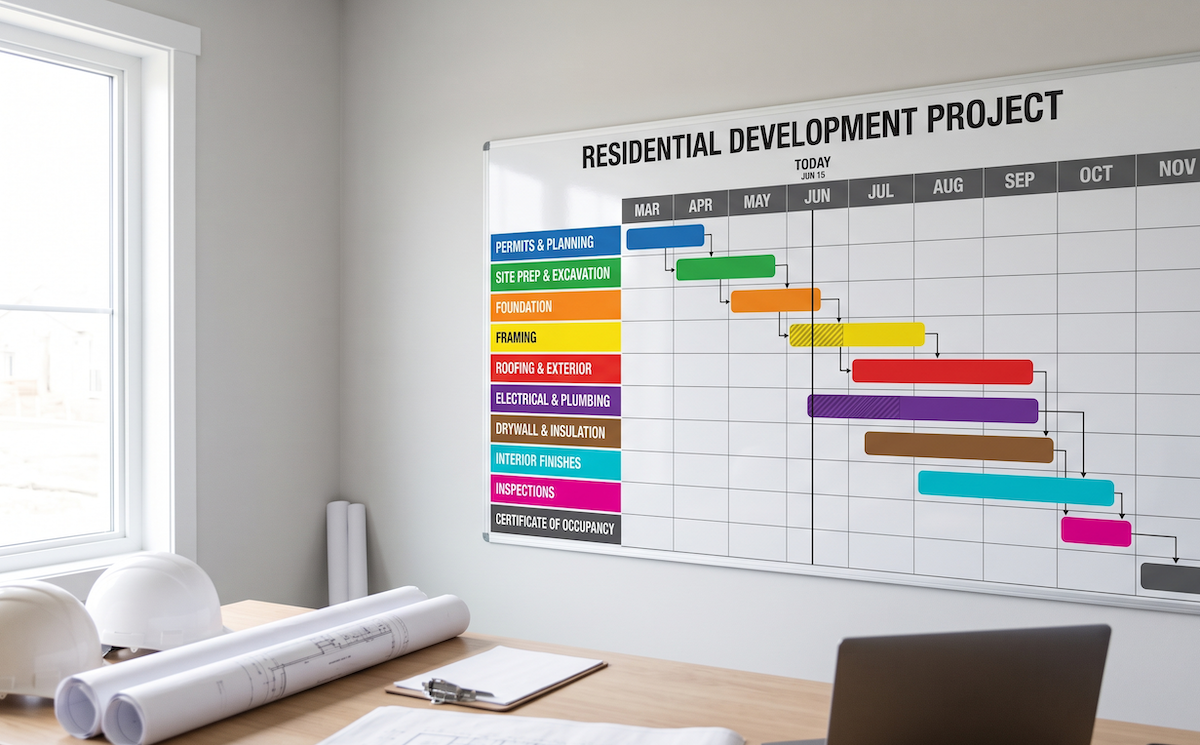
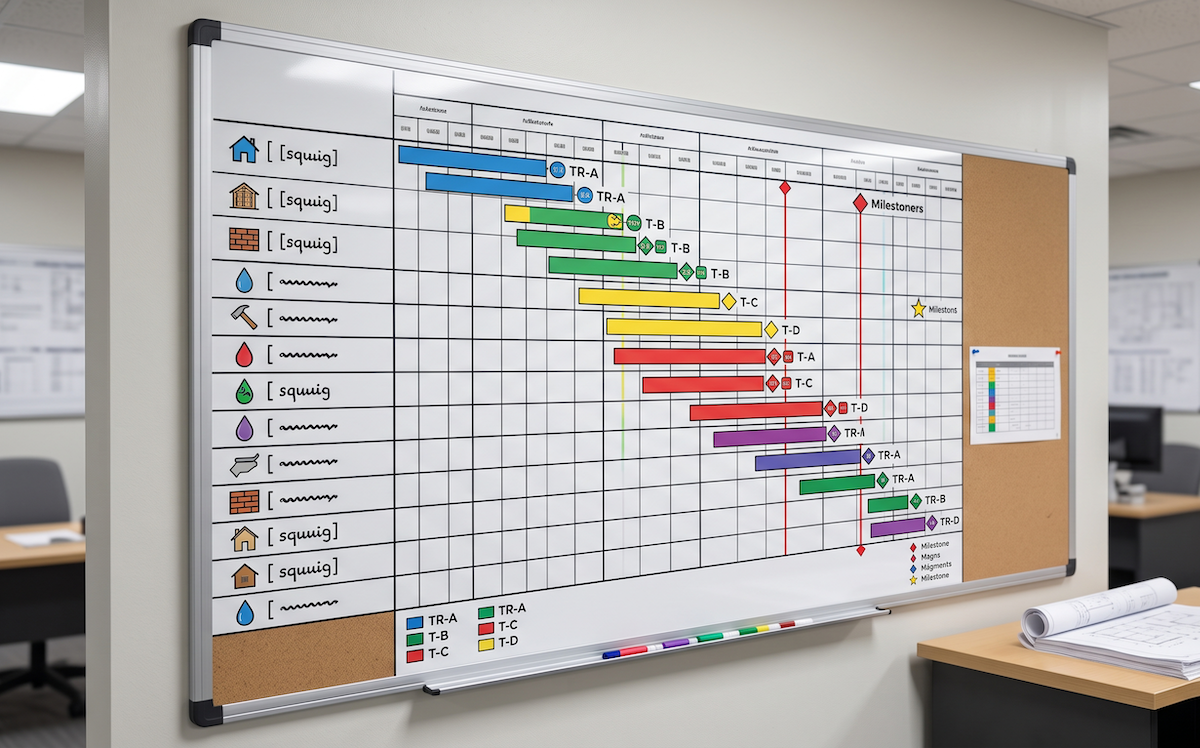
A custom home build involves 20 or more subcontractor trades, each with their own availability, lead times, and sequencing requirements. Electrical rough-in cannot happen before framing is complete and inspected. Insulation cannot be installed before electrical and plumbing rough-in inspections pass. Drywall cannot happen before insulation is approved. Each step depends on the previous one, and a delay at any point creates a cascade of rescheduling downstream.
Experienced GCs manage these relationships over years. They know which electrician responds to calls on Saturday, which drywaller has the best lead time in the current market, and which plumber’s subs are reliable when the GC isn’t on-site. That knowledge is not available on YouTube.
The Hidden Costs of Being Your Own GC
Time Is the First Real Cost
Managing a residential construction project is effectively a full-time job for 8–14 months. If you have existing full-time employment, the question isn’t whether this will affect your work. The question is how much. Phone calls during business hours, site visits, material pickups, inspection scheduling none of this happens on evenings and weekends alone.
Subcontractor Pricing Without GC Relationships
Established general contractors receive preferred pricing from subcontractors because they provide consistent, ongoing work. Owner-builders who call independently are often quoted retail rates and may struggle to attract quality subs at all, particularly in competitive markets. The 15–20% you intended to save on GC markup may be largely offset by paying more for subcontracted labor.
Mistakes Cost Real Money
When a professional GC makes an error, their insurance, warranty commitments, and professional reputation are on the line. When you make an error as an owner-builder, approving a wall location that turns out to violate setback requirements, or failing to sequence inspections correctly, the correction costs come directly out of your budget. Framing errors discovered after drywall is up are expensive to fix.
When Owner-Builder Actually Works
There are situations where owner-builder makes real sense:
- You have direct experience in construction project management
- You have established relationships with subcontractors in your area
- The project is relatively simple (addition, garage, outbuilding)
- You have the schedule flexibility to manage the project full-time
- You’re building in a low-competition market where subs are accessible
The Hybrid Approach Worth Considering
Some experienced custom builders, including Bailey Brothers, offer construction management services where you maintain owner control over major decisions. Still, the builder handles trade scheduling, inspections, and day-to-day coordination for a defined management fee. This captures some of the cost savings while protecting you from the most common owner-builder pitfalls.
Frequently Asked Questions
Q1: How much can you realistically save by being your own GC?
General contractor markup typically ranges from 15–25% of total project cost. In theory, that’s the savings potential. In practice, after accounting for retail subcontractor pricing, scheduling inefficiencies, mistakes, and the value of your own time, most owner-builders in post-project analyses report saving 5–10%, and many report breaking even or spending more than they would have with a professional GC.
Q2: Do I need a special license to act as my own GC?
Requirements vary significantly by state. Some states allow owner-builders freely with limited restrictions. Others require registration, limit you to one owner-builder project per defined period, or require proof of your intent to occupy the home. Always verify your state’s specific owner-builder statutes before proceeding, and check requirements with your lender; some construction loans don’t fund owner-builder projects.
Q3: What happens if a subcontractor does bad work when I’m the GC?
As the GC, you are responsible for accepting the work. If you approve a subcontractor’s work and later discover defects, the legal and financial recourse depends on your contract with that sub and the nature of the defect. Without an experienced eye during inspections, problems are often approved unknowingly. This is one of the most significant risk factors of the owner-builder model.
Q4: Can Bailey Brothers help someone who wants to be involved but not fully manage the build?
Absolutely. We work with clients across a spectrum of involvement from fully managed builds where we handle everything, to collaborative arrangements where clients are heavily engaged in decisions while we manage execution. We can discuss what level of involvement makes sense for your specific situation, goals, and schedule.
About the Author:
The Bailey Brothers Builders Team has been crafting custom homes across the region for over 30 years. Specializing in on-your-lot construction, their hands-on approach, transparent process, and commitment to quality have helped hundreds of families turn their vision into a place called home.
Ready to Build Your Dream Home the Right Way? At Bailey Brothers Builders, we bring decades of craftsmanship and transparent communication to every custom home project. No hidden costs. No cutting corners, just quality homes built on your lot, your way. Call us today or visit baileybrothersbuilders.com to schedule your free consultation.